- Leaning on it alone, with no price action or fundamentals to back the call.
- Acting the instant it touches an extreme, ignoring that extremes can run for weeks.
- Treating it as a forecast when it is really just a snapshot of current mood.
What Is the Fear and Greed Index?

5 min to read
Updated on 26 Jun 2026
Spreadsheets do not move markets. People do. And people get scared, then greedy, often at the worst possible time. Everybody panics at once and prices crater. Everybody piles in and they rip higher. The Fear and Greed Index sticks a number on that mood, so the emotion driving it stops being a vague feeling and becomes something you can actually glance at.
What Is the Fear and Greed Index?
The Fear and Greed Index is a tool that measures the overall mood of the market on a simple scale from 0 to 100. Low score, investors are spooked and backing off. High score, they are greedy and chasing the move. CNN built the first one, aimed at the US stock market. There is also a hugely popular crypto fear and greed index that does the same job for Bitcoin and the wider digital asset world. Same job in both cases: pin down how the crowd feels this minute.
Trade the Sentiment
Want to see how market mood pushes real prices? Open a free demo account and trade 100+ assets with virtual funds.
Reading the mood is the easy bit. Trading on it without blowing up your account is where the real work starts. Knowing the crowd is greedy does not tell you when the move ends, and knowing it is fearful does not stop a falling market from falling further. The only way to build that feel is to put the signal in front of live prices and watch how it actually behaves.
A demo trading account lets you watch how fear and greed play out on live charts, using virtual funds while you build the instinct.
How Does the Fear and Greed Index Work?
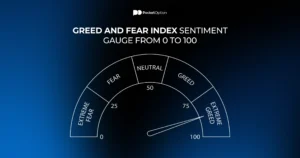
The whole thing comes down to that 0 to 100 scale, carved into emotional zones. The bitcoin fear and greed index, like its stock-market cousin, drops the current reading into a band that tells you at a glance whether the crowd is panicking or partying.
| Score | Sentiment | What It Tends to Suggest |
|---|---|---|
| 0 to 24 | Extreme Fear | Investors are very worried, assets often oversold |
| 25 to 44 | Fear | Caution runs the room |
| 45 to 55 | Neutral | No strong emotional lean either way |
| 56 to 75 | Greed | Optimism building, risk appetite climbing |
| 76 to 100 | Extreme Greed | Euphoria sets in, assets often overbought |
At heart the logic runs contrarian. Extreme fear clusters near bottoms, after almost everyone has already dumped. Extreme greed shows up at tops, when the stragglers are still shoving through the door.
How Is the Fear and Greed Index Calculated?
No single figure captures a mood, so the index blends several signals into one score. The CNN stock version pulls from seven inputs, among them market momentum, stock price strength, demand for safe-haven assets, junk bond demand, and volatility tracked through the VIX. The fear and greed index crypto version leans on a different mix suited to digital assets: price volatility, trading volume and momentum, social media chatter, Bitcoin’s share of the total market, and search trends. Each input is weighted, then rolled up into the final 0 to 100 number.
How Traders Use the Fear and Greed Index
For most traders, the reading is a gut check, not a trigger. When the cnn fear greed index flashes extreme greed, it is a prompt to slow down and ask whether the rally has stretched too far. When it shows extreme fear, it hints that panic may have left bargains lying around. You are not meant to obey the number. You use it to push back against your own gut when a move is moving fast.
Contrarian Trading Strategy
This is where the well-worn idea kicks in: at the extremes, do the opposite of the crowd. Pulling up the fear and greed index today and seeing extreme fear might flag a buying opportunity, since assets are often oversold when everyone is terrified. A reading buried in extreme greed can be a cue to bank some profit or tighten risk before the mood flips. The catch is timing. Extremes can drag on far longer than feels reasonable, so seasoned contrarians wait for confirmation instead of catching a falling knife.
Common Mistakes and Limitations
Plenty of people misuse this tool. Some call it the greed and fear index, flip the name around, and then treat a single reading as a precise buy or sell signal, which it never was. A few common traps:
It is a mood gauge, that is the whole of it. Great for context. A terrible plan on its own.
Fear, Greed and Trading Psychology
Strip away the math and what is the fear and greed index really tracking? Human emotion. Greed is the fuel behind FOMO, that itch to buy something purely because it keeps climbing. Fear is what sets off panic selling at the exact bottom. The index exists because these two feelings move markets more than most people care to admit. So when you ask what is the fear and greed index actually good for, the honest answer is self-awareness. It holds a mirror up to the crowd, and by extension, to you. Spotting greed in the data is a reminder to check your own urge to chase, and spotting fear is a nudge to question your own panic before you act on it.
Risk Disclaimer: Trading involves significant risk of capital loss. This article is for educational purposes only and does not constitute financial advice. Always conduct independent research and consider your risk tolerance before making any trading decisions.
FAQ
What Does the Fear and Greed Index Measure?
It puts overall market sentiment on a 0 to 100 scale. Low numbers, fear. High numbers, greed. It does not track price head-on, it reads the collective mood behind the buying and selling at any given moment.
Can the Fear and Greed Index Predict Market Reversals?
Not reliably. It often swings to extremes near major tops and bottoms, but it cannot tell you when the turn will arrive. Markets can stay fearful or greedy for a long stretch, so it works better as context than as a precise timing signal.
Is the Fear and Greed Index Useful for Crypto Trading?
Yes, the crypto version is widely followed because digital assets are especially emotional and volatile. Many traders check it daily to gauge whether Bitcoin sentiment looks overheated or beaten down, then pair that with other analysis before acting.
What Is Considered Extreme Fear or Extreme Greed?
Readings near the bottom of the scale, roughly 0 to 24, count as extreme fear, while readings near the top, around 76 to 100, signal extreme greed. Both ends mark emotional extremes that usually deserve a closer look.
About the author :
Learning
Sign up for more like this
Customize your newsfeed with content you're actually interested in — get up-to-date personalized newsletter in your inbox.

Your comment
Comments are pre-moderated to ensure they comply with our blog guidelines.